
Chestnuts
The Winter Classic
Did you know that chestnuts are very different from most other nuts?
Few nuts are as closely associated with comfort, tradition, and community as chestnuts. While most nuts are prized for richness and healthy fats, chestnuts followed a different path, becoming an important source of nourishment for generations of people across Europe and Asia. From ancient Roman settlements and mountain villages to modern festive celebrations, chestnuts have provided warmth, sustenance, and seasonal joy.
In a world of luxury nuts and premium snacks, the chestnut stands apart.
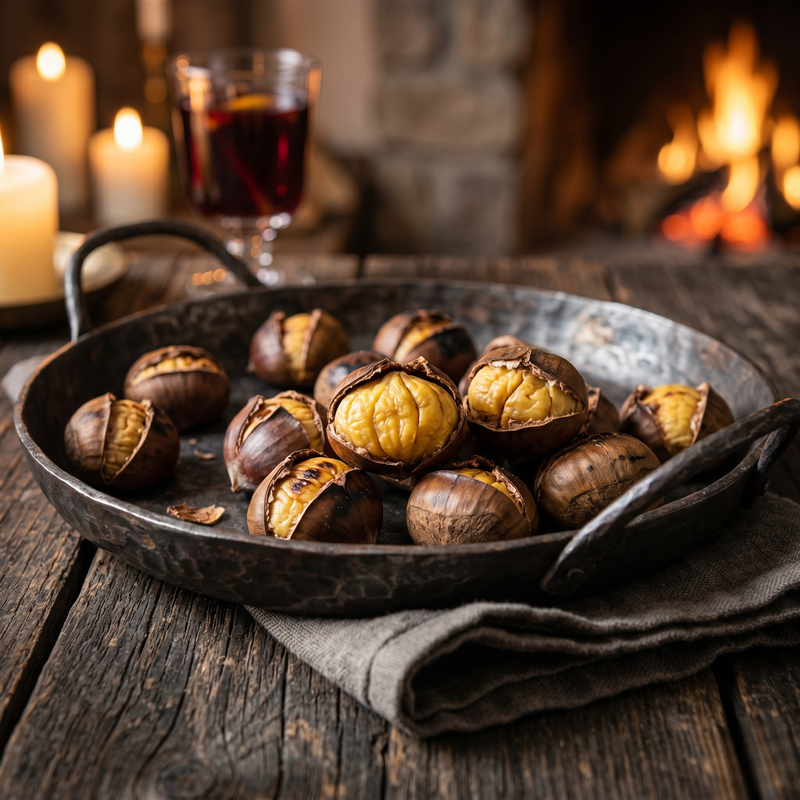
It was never primarily a delicacy. For centuries, it was survival food—a staple that helped mountain communities survive winters when grain was scarce. Chestnut flour made bread. Chestnut broth made stew. Roasted chestnuts provided warming nourishment to families huddled around fires across Europe and Asia.
Over time, that survival food transformed into something cultural. The image of roasting chestnuts became synonymous with festivity, warmth, and seasonal comfort in ways that few foods have achieved.
Today, chestnuts are celebrated in markets, kitchens, and festive traditions across three continents—a remarkable journey for a nut that began as the food of mountain people.
Discover Fascinating Facts About Chestnuts
Did you know that chestnuts are very different from most other nuts?
Did you know that chestnuts are traditionally roasted over open fires?
Did you know that chestnut trees can live for hundreds of years?
Did you know that chestnuts once helped feed entire communities?
Did you know that chestnuts are celebrated in both Europe and Asia?
Did you know that chestnuts are one of the few nuts commonly eaten as a starchy food?
Did you know that chestnuts inspired one of the world's most famous winter songs?
Did you know that chestnut flour was once a staple food?
Did you know that chestnuts have been cultivated for over 2,000 years?
Did you know that chestnuts are protected by a spiky outer shell?
Did you know that chestnuts are naturally cholesterol-free?
Did you know that chestnuts are popular in both sweet and savoury dishes?
Did you know that China is the world's largest producer of chestnuts?
Did you know that chestnut trees helped shape rural economies?
Did you know that chestnuts are often called the "bread tree"?
Did you know that chestnut wood is highly valued?
Did you know that chestnuts symbolize abundance and prosperity in many cultures?
Did you know that chestnuts are one of the oldest cultivated tree foods in the world?
Did you know that chestnuts are becoming increasingly popular in Indian gourmet cuisine?
Did you know what chestnuts are called in different Indian languages?
Few nuts are as closely associated with comfort, tradition, and community as chestnuts. While most nuts are prized for richness and healthy fats, chestnuts followed a different path, becoming an important source of nourishment for generations of people across Europe and Asia.
From ancient Roman settlements and mountain villages to modern festive celebrations, chestnuts have provided warmth, sustenance, and seasonal joy. Their story reminds us that some foods become memorable not because they are rare or luxurious, but because they bring people together.
More than a nut, the chestnut is a symbol of warmth, resilience, and the enduring traditions that connect generations.