
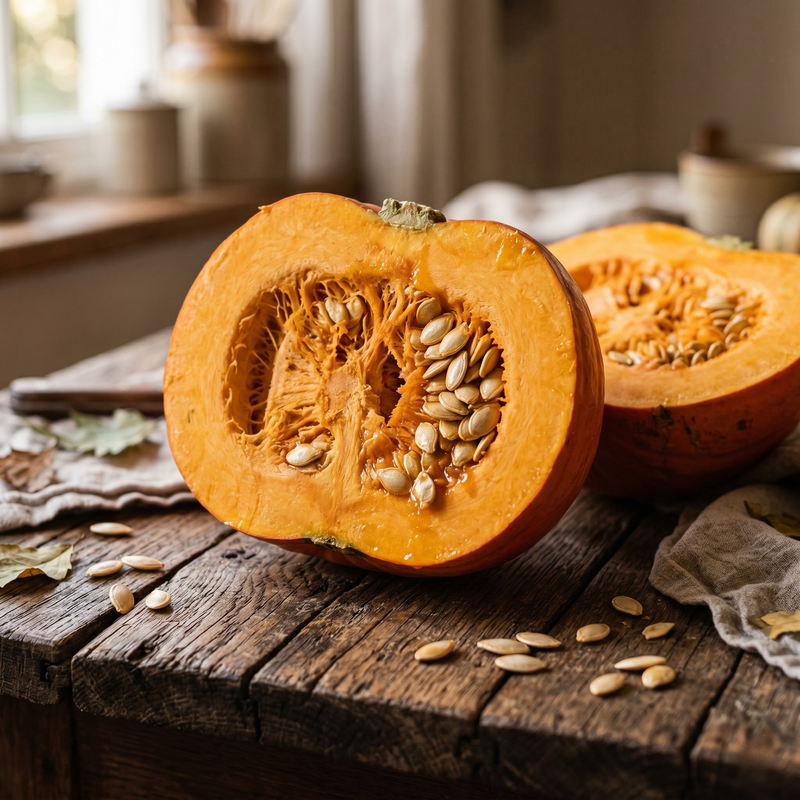
Pumpkin Seeds
The Seed Vault
Did you know that every pumpkin is a natural seed vault?
Pumpkin seeds represent one of food history's most interesting reversals: a seed that may have originally been the primary reason humans cultivated the pumpkin plant, now often discarded in modern kitchens. Yet their story is coming full circle. As consumers rediscover the nutritional value hidden inside every pumpkin, these ancient seeds are finding new relevance in premium snacking, health foods, and global cuisine.
The pumpkin's most underappreciated gift may be its seeds.
Archaeological evidence suggests that early humans in Mesoamerica may have cultivated cucurbit plants primarily for their seeds, not their flesh. The fruit came later; the seed came first.
Pumpkin seeds—known as pepitas in their hull-free form—have been central to Mexican cuisine for thousands of years, forming the base of traditional sauces and moles. In Austria, Styrian pumpkin seed oil is one of Europe's most prized regional specialties. And across Asia, roasted pumpkin seeds have long been popular snacks.
In India, the story is just beginning. A seed once discarded with the pumpkin scraps is now recognized as a premium nutritional ingredient.
Discover Fascinating Facts About Pumpkin Seeds
Did you know that every pumpkin is a natural seed vault?
Did you know that pumpkin seeds were enjoyed long before pumpkins became popular foods?
Did you know that "Pepita" means little seed?
Did you know that not all pumpkin seeds look the same?
Did you know that pumpkins and squash belong to the same family?
Did you know that Native American farmers helped develop pumpkins through selective cultivation?
Did you know that roasted pumpkin seeds have been enjoyed for thousands of years?
Did you know that some pumpkins produce naturally shell-free seeds?
Did you know that pumpkins were once valued more for their seeds than their flesh?
Did you know that pumpkin seeds are found inside one of the largest fruits commonly grown?
Did you know that pumpkin seeds helped pumpkins spread around the world?
Did you know that pumpkin seeds are naturally cholesterol-free?
Did you know that pumpkin seeds appear in cuisines around the world?
Did you know that some traditional Mexican sauces rely on pumpkin seeds as a base?
Did you know that pumpkins produce far more seeds than they need?
Did you know that pumpkin flowers are edible too?
Did you know that pumpkins belong to one of the world's oldest cultivated plant families?
Did you know that pumpkin seeds are becoming increasingly popular in India?
Did you know that the pumpkin teaches one of nature's simplest lessons?
Did you know what pumpkin seeds are called in different Indian languages?
From ancient Mesoamerican cultivation to Mexican pipián sauces, from Austrian pumpkin seed oil to modern Indian snack mixes, pumpkin seeds have always carried more value than most people realize.
Their story is one of rediscovery—a reminder that the most valuable things are sometimes the ones we overlook most easily.
More than a seed, the pumpkin seed is proof that nature's greatest generosity is often found in the parts we least expect.
Inspired by what you've discovered?
Explore Nut Story Pumpkin Seeds & Related Products
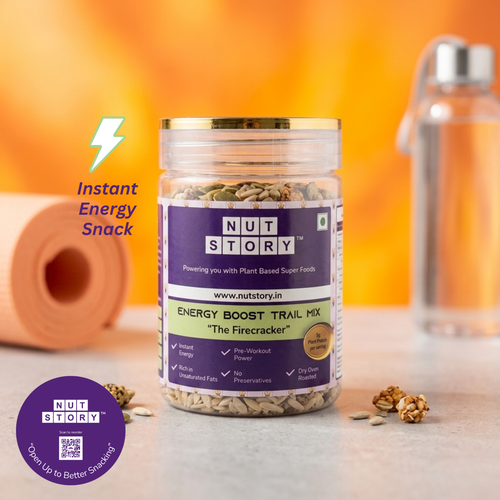
Trail Mix
Nut Story Energy Boost Trail Mix — ⚡ "The Firecracker" | Natural Energy, No Crash
₹ 599.00 ₹ 569.002 options
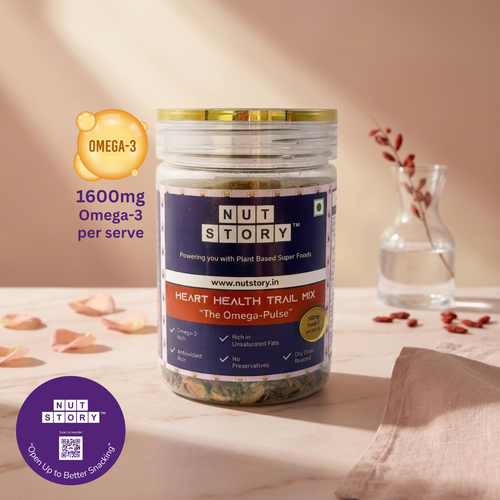
Trail Mix
Nut Story Heart Health Trail Mix — ❤️ "The Omega-Pulse" | 1600mg Omega-3 per Serving
₹ 599.00 ₹ 569.002 options
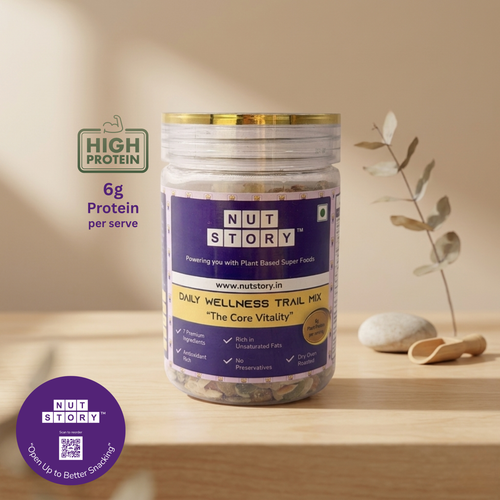
Trail Mix
Nut Story Daily Wellness Trail Mix — 🛡️ "The Core Vitality" | 7-Superfood Blend
₹ 599.00 ₹ 569.002 options
Trail Mix
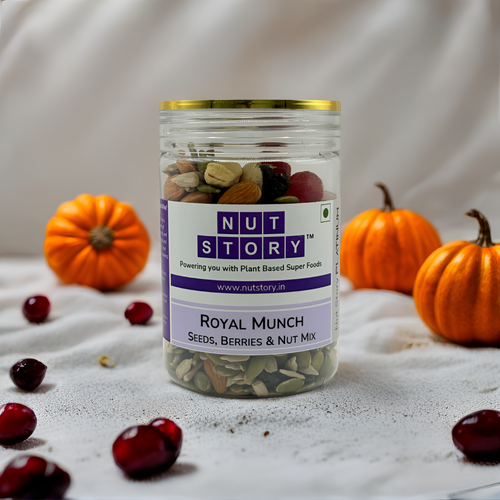
Nut Story Royal Munch | 👑 Seeds, Berries & Nut Mix | Platinum Trail Mix
₹ 499.00 ₹ 449.002 options