
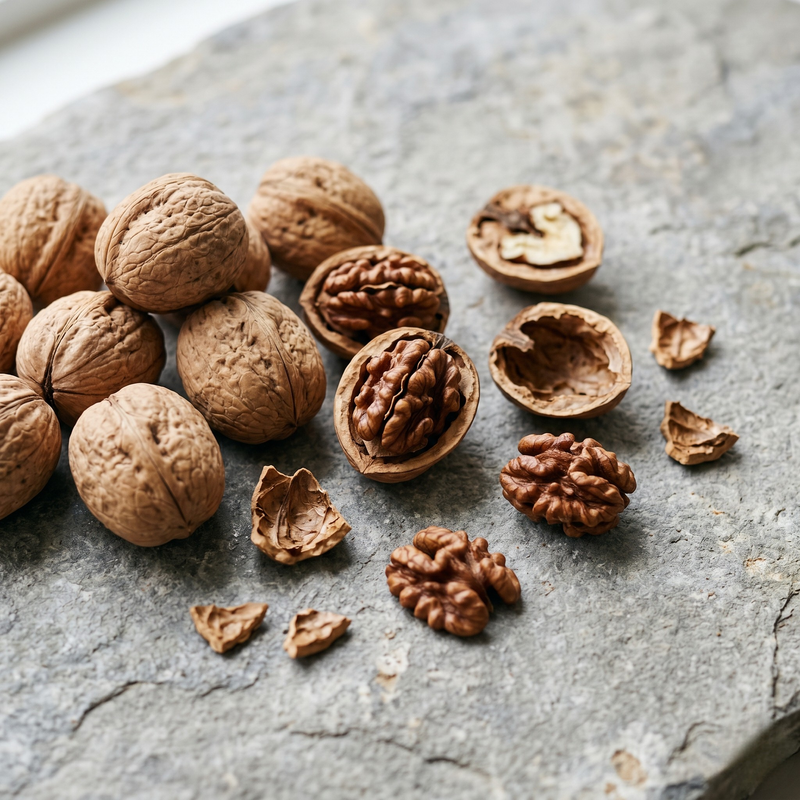
Walnuts
Nature's Brain
Did you know that walnuts look remarkably like the human brain?
For thousands of years, walnuts have been associated with the human mind. Their brain-like appearance, combined with their remarkable longevity as a tree and their ability to travel across civilizations, gave them a unique cultural identity that no other nut can claim. The walnut's story is one of intelligence—both nature's design and humanity's recognition of it.
Some foods nourish the body.
A rare few capture the imagination.
Walnuts have done both for thousands of years.
Their striking resemblance to the human brain made them objects of fascination long before modern nutrition science. Ancient philosophers, physicians, and scholars saw the connection and drew conclusions that, remarkably, later science would revisit.
Beyond their appearance, walnuts earned a global reputation through centuries of trade. They travelled the Silk Road, nourished royal households in Persia, and became deeply embedded in food cultures across Asia, Europe, and the Americas.
Today, walnuts remain one of the world's most widely consumed and most studied nuts. Their combination of flavour, heritage, and nutritional interest ensures that their story continues to grow.
Discover Fascinating Facts About Walnuts
Did you know that walnuts look remarkably like the human brain?
Did you know that walnuts are among the oldest foods eaten by humans?
Did you know that walnuts were once known as the "Royal Nut"?
Did you know that walnuts travelled the Silk Road?
Did you know that walnut trees can live for centuries?
Did you know that walnuts naturally contain Omega-3 fatty acids?
Did you know that a walnut shell is a masterpiece of natural engineering?
Did you know that not all walnuts are the same?
Did you know that Chilean walnuts are prized for their light colour and mild flavour?
Did you know that Kashmir is famous for some of India's finest walnuts?
Did you know that walnut wood is almost as valuable as the nut itself?
Did you know that walnuts naturally contain antioxidants?
Did you know that walnuts appear in cuisines across multiple continents?
Did you know that walnuts were once considered symbols of wisdom?
Did you know that walnut orchards are often family legacies?
Did you know that cracking a walnut was once considered a test of skill?
Did you know that walnuts are naturally cholesterol-free?
Did you know that the world's largest walnut-producing regions span multiple continents?
Did you know that walnut trees are planted for the future, not just the present?
Did you know what walnuts are called in different Indian languages?
Few foods have inspired as much wonder as the walnut. From the ancient scholars who saw the human brain reflected in its lobes, to the modern consumers who reach for it as a brain food, walnuts have carried a powerful message across millennia.
Their journey from wild forests to royal courts to global supermarkets tells a story of resilience, wisdom, and enduring value.
More than a nut, the walnut is a reminder that nature sometimes creates things so remarkable that humans simply cannot stop talking about them—for thousands of years.
Inspired by what you've discovered?
Explore Nut Story Walnuts & Related Products
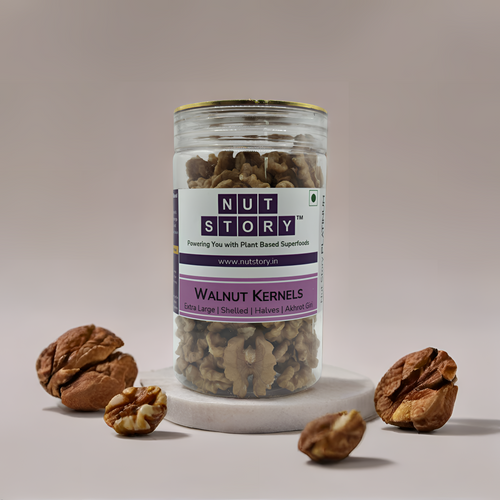
Walnuts
Nut Story Platinum Walnuts | Extra-Large Colossal Chilean Halves | 9,080mg Omega-3 ALA
₹ 1,049.00 ₹ 899.002 options