
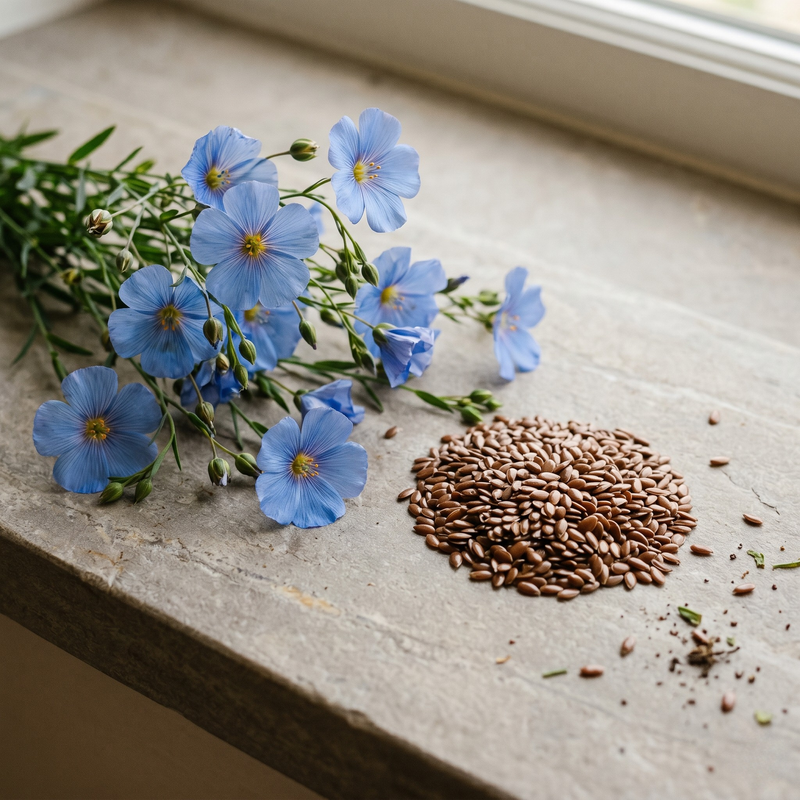
Flax Seeds
The Golden Thread
Did you know that flax gave humanity both food and clothing?
Flax is perhaps the most quietly essential plant in human history. It clothed pharaohs and sailors. It powered the Age of Exploration through linen sails and treated rope. It sustained communities through its edible seeds and pressed oil. Today, it finds a new audience as modern consumers discover its nutritional value. The golden thread of flax runs through thousands of years of human civilization—a plant that has always given more than it takes.
If any plant deserves the title of civilization's most useful, flax has a strong claim.
For thousands of years, flax provided both food and fabric—a combination no other major crop has matched. Ancient Egyptians cultivated it for linen to wrap their mummies and clothe their priests. Medieval European sailors relied on flax for the sails and ropes that powered their ships. Rural communities across Ireland, Belgium, and Russia built entire economies around flax cultivation and linen production.
Today, flax seeds are valued in a completely different context—as a plant source of Omega-3 fatty acids and dietary fibre, increasingly finding their way into Indian kitchens through rotis, smoothies, and health-focused snacks.
Old plant. New reasons to love it.
Discover Fascinating Facts About Flax Seeds
Did you know that flax gave humanity both food and clothing?
Did you know that linen is made from flax?
Did you know that ancient Egyptians highly valued flax?
Did you know that some of the world's oldest textiles were made from flax?
Did you know that flax seeds come from the same plant that produces linen fabric?
Did you know that flax flowers are surprisingly beautiful?
Did you know that flax may be one of humanity's oldest cultivated plants?
Did you know that flax was once more valuable than cotton in many regions?
Did you know that flax fibres are hidden inside the stem?
Did you know that ancient Egyptian mummies were wrapped in linen made from flax?
Did you know that flax helped power the Age of Sail?
Did you know that flax seeds come in both golden and brown varieties?
Did you know that flax seeds are naturally cholesterol-free?
Did you know that flax was traded across ancient civilizations?
Did you know that a single flax plant can contribute to multiple industries?
Did you know that flax fields once shaped entire rural economies?
Did you know that linen remains one of the world's most respected natural fabrics?
Did you know that flax seeds are becoming increasingly popular in India?
Did you know that flax demonstrates one of nature's best examples of dual-purpose plants?
Did you know what flax seeds are called in different Indian languages?
From ancient Egyptian linen to Age of Sail canvas, from medieval rural economies to modern wellness pantries, flax has been a constant thread through human civilization.
Its story is one of extraordinary versatility—a plant that reinvents its relevance across generations without ever losing its essential value.
More than a seed, flax is a reminder that the most enduring contributions to human life often come from plants that give generously and ask for very little in return.
Inspired by what you've discovered?
Explore Nut Story Flax Seeds & Related Products
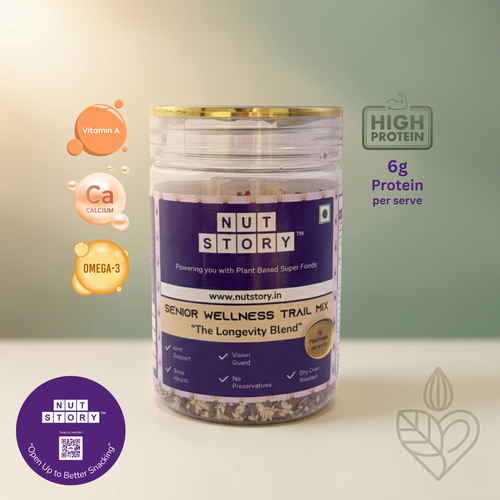
Trail Mix
Nut Story Senior Wellness Trail Mix — 🌿 "The Longevity Blend" | Goji, Flax & Sesame for the Golden Years
₹ 599.00 ₹ 569.002 options
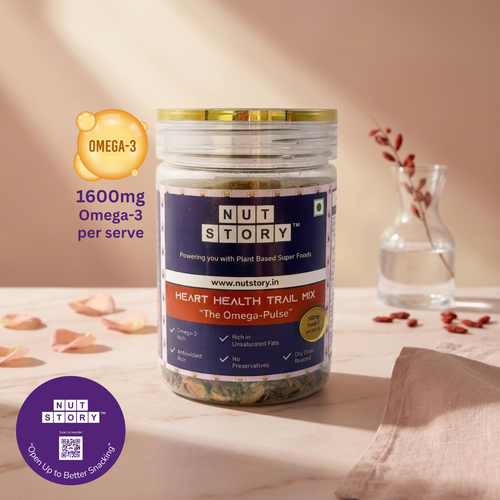
Trail Mix
Nut Story Heart Health Trail Mix — ❤️ "The Omega-Pulse" | 1600mg Omega-3 per Serving
₹ 599.00 ₹ 569.002 options